Florida HVAC Tax Credits & Rebates in 2026: How Homeowners Can Still Save on a New System
If you’re planning to replace your air conditioner, heat pump, or heating system this year, you may be wondering what incentives are still available. Over the last several years, federal and state energy-efficiency programs have undergone several changes, leaving many Florida homeowners unsure about which tax credits and rebates still apply.
The good news is that savings opportunities still exist in 2026. While some programs have evolved, homeowners can still take advantage of federal tax incentives, state-administered rebate programs, and utility company rebates that can help reduce the cost of upgrading to a high-efficiency HVAC system.
Understanding how these programs work—and which systems qualify—can help you maximize your savings while improving your home’s comfort and energy efficiency.
How HVAC Incentives Have Changed
If you’ve researched HVAC tax credits in the past, you’ve probably come across information about Section 25C of the federal tax code. Section 25C was a popular energy-efficiency tax credit that helped homeowners offset the cost of qualifying home improvements, including certain HVAC upgrades.
Over time, federal energy-efficiency programs have shifted toward a more targeted approach. Rather than offering broad incentives for a wide range of equipment, today’s programs place greater emphasis on installing systems that meet specific efficiency standards and support long-term energy reduction goals.
Many of these changes stem from updates tied to the Inflation Reduction Act, a federal law that expanded and reshaped numerous energy-efficiency and electrification programs. As a result, homeowners now have access to a combination of tax credits, rebates, and utility incentives that can often be used together to lower project costs.
The Energy Efficient Home Improvement Credit
One of the primary federal incentives available to homeowners is the Energy Efficient Home Improvement Credit.
This federal tax credit rewards homeowners who invest in qualifying energy-efficient upgrades. Depending on the type of equipment installed and the efficiency ratings achieved, homeowners may be eligible to claim a portion of their project costs when filing their federal taxes.
Many qualifying HVAC systems must meet specific performance requirements, often including ENERGY STAR® certification. ENERGY STAR is a government-backed program that identifies products designed to use less energy without sacrificing performance.
Qualifying equipment may include:
- High-efficiency central air conditioners
- Heat pump systems
- Certain heating equipment
- Other eligible energy-saving home improvements
While qualification requirements vary, this credit remains an important tool for homeowners looking to reduce the cost of upgrading to more efficient HVAC equipment.
What Is HEEHRA?
Another program that has received significant attention is HEEHRA, which stands for the High-Efficiency Electric Home Rebate Act.
HEEHRA was created to help make energy-efficient home upgrades more affordable by providing funding for rebate programs administered at the state level. Unlike tax credits, which typically provide savings when you file your taxes, rebates are designed to reduce costs closer to the time of purchase or installation.
Many HEEHRA-funded programs focus on electrification projects. In simple terms, electrification refers to replacing older or less-efficient equipment with high-efficiency electric alternatives that use less energy and produce lower operating costs.
For HVAC systems, this often includes:
- High-efficiency heat pumps
- Electric heating and cooling equipment
- Related home energy upgrades
Because HEEHRA programs are administered by individual states, funding availability, eligibility requirements, and income qualifications can vary. Some programs are specifically designed to help low- and moderate-income households access energy-efficient equipment that might otherwise be difficult to afford.
Florida Utility Rebates and FPL AC Rebates
In addition to federal and state incentives, many Florida homeowners may qualify for rebates through their utility provider.
Florida Power & Light (FPL) and other utility companies offer programs designed to encourage energy-efficient upgrades and reduce strain on the electrical grid during periods of peak demand.
Depending on the utility provider and the equipment selected, homeowners may find incentives for:
- High-efficiency air conditioning systems
- Heat pumps
- Smart thermostats
- Other approved energy-saving upgrades
While utility rebates may not cover the entire cost of a new HVAC system, they can often be combined with federal incentives and state-administered programs to create additional savings.
Because rebate requirements vary, homeowners should verify approved equipment lists and documentation requirements before moving forward with an installation.
How to Maximize Your HVAC Savings in 2026
The largest savings opportunities often come from combining multiple programs rather than relying on a single incentive.
A qualifying HVAC installation may be eligible for:
- Federal tax credits
- HEEHRA-funded rebates
- Utility company incentives
- Manufacturer promotions
Choosing equipment that meets current efficiency standards is one of the most important factors in maximizing available savings. Systems that meet ENERGY STAR requirements and other recognized efficiency benchmarks are often eligible for a wider range of programs.
Proper planning is equally important. Many incentives require specific equipment ratings, professional installation, and supporting documentation. Missing one requirement could mean missing out on valuable savings.
Why Working With an HVAC Professional Matters
Energy-efficiency incentives can be confusing, especially as programs continue to evolve.
An experienced HVAC contractor can help you identify which systems may qualify for available incentives, explain how various programs work together, and ensure that installation and documentation requirements are met.
At ABC Air Conditioning & Heating Specialist Inc.™, we stay current on federal tax credits, HEEHRA-funded rebate opportunities, utility incentive programs, and evolving efficiency standards so our customers can make informed decisions about their HVAC investments.
If you’re considering replacing your air conditioner, heat pump, or heating system in 2026, contact ABC Air Conditioning & Heating Specialist Inc.™ today. We’ll help you explore available savings opportunities and find an energy-efficient solution designed for long-term comfort, performance, and value.
Not valid with any other promotions. Limit one coupon per customer.

Based on approval. Not valid with any other promotions. Limit one coupon per customer.

*On select HVAC systems. Not valid with any other promotions. Limit one coupon per customer.

Not valid with any other promotions. Limit one coupon per customer.

Our technicians are comfortable working on all brands of A/C units.
Not valid with any other promotions. Limit one coupon per customer.
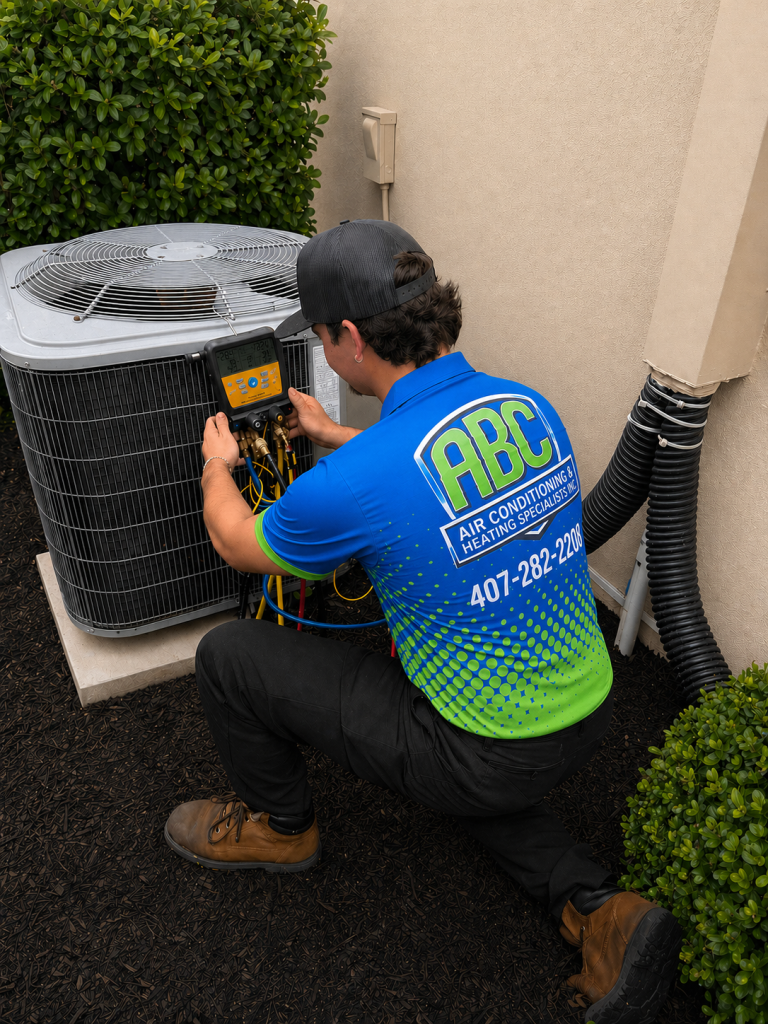
Includes removal of the current unit. Our team of experts will install and test the new unit.
Not valid with any other promotions.Limit one coupon per customer.

We will check your system’s coils, refrigerant levels, electrical components, filtration, and overall condition.
Discounted price for a “Service Call” is provided only when the customer pays for an additional repair. Not valid with any other promotions. Limit one coupon per customer.

Does not include new system replacement/installation or duct system replacement.
Not valid with any other promotions. Limit one coupon per customer.

Now Offering 0% Interest Financing
Keeping you and your family comfortable all year long.

Now Offering Free Estimates
Contact ABC Air Conditioning & Heating Specialist Inc.™ today!